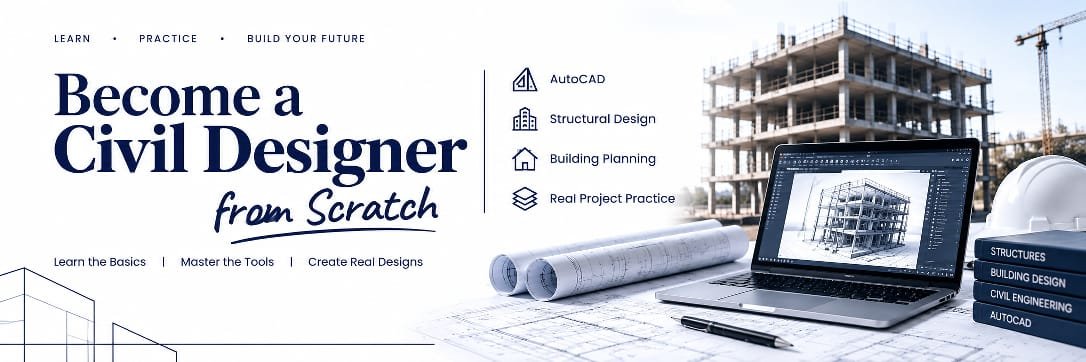
Getting started in civil design can be intimidating, especially if you’re unsure of what skills to prioritise.It’s totally normal to feel this way at first. You just have to learn it step by step, learn the core concepts, get your hands dirty with the important software and keep practicing. Begin with small and simple projects to gain confidence.
Civil designers are the ones who put together the drawings, layouts and detailed plans for construction teams to follow on site. Civil design gives you practical, real-world skills as you learn, whether you’re a student, looking to change careers or just jumping in as a complete beginner, and helps you work out what kind of work you really like.
What Will You Learn in a Civil Design Course?
Reading about civil design is one thing, but actually working on drawings is where you start getting comfortable with it. A course can introduce you to the basic concepts as well as the software and practical work used in civil design. The exact topics may differ from one course to another, but you can expect areas such as:
1. Civil Design Fundamentals
You’ll first get familiar with the basics, including technical drawings, measurements, layouts, and some of the key concepts used in construction.
2. AutoCAD for Civil Design
AutoCAD is one of the tools you’ll commonly come across in civil design. As you learn it, you can practice drawing floor plans, elevations, sections, and dimensions, along with other drawings that are used in civil projects.
3. 2D and 3D Design
You’ll work with 2D drawings and, depending on the course, get an introduction to 3D design as well. This helps you understand how a basic idea can be turned into a proper design.
4. Reading Technical Drawings
Knowing how to read technical, architectural, and engineering drawings is a basic skill you’ll need when working on civil design projects.
5. Practical Project Work
Projects let you put the things you’ve learned into practice instead of keeping everything limited to theory. You can also save your best project work and use it in your portfolio when you begin applying for jobs.
If you’re looking for a civil design course in Indore, check what each course actually offers. Look at the software covered, practical projects, certification, internship options, and placement support instead of comparing courses only by their duration.
Placement After Learning a Civil Design Course
Completing a civil design course can give you a starting point, but getting a job depends on more than just finishing the course. You’ll need to know how to use the software, work on drawings, explain your projects, and handle basic interview questions. The type of job you can get will also depend on what the company needs.
For someone new to the field, having a certificate along with placement support can make the job-search process a little easier. It can give you some direction on where to apply and how to prepare for interviews.
Practical assignments are worth paying attention to as well because they give you actual work to show during interviews.
If you’re comparing the best civil design training institute in Indore with certificate and placement, find out what the placement support really includes. Also check experience under your belt, you can start looking at different roles and opportunities.
Jobs After Learning Civil Design
After developing civil design skills, you can explore entry-level roles such as:
- Civil CAD Designer
- Civil CAD Drafter
- Junior Civil Designer
- CAD Technician
- Civil Draftsman
- Design Assistant
- Junior Design Engineer
The kind of job you can apply for will depend on your education, the skills you’ve developed, and what a particular company is looking for.
You can also learn more design software as you gain experience. Along with that, getting better at creating drawings and handling project documentation can give you more options when you start looking for work.
How to Choose the Best Civil Design Course in Indore?
Searching for a civil design course in Indore? Before you sign up for a course, look at a few options and see what each one actually offers. Check the syllabus, software covered, project work, and the amount of hands-on practice you’ll get. This will give you a better idea of the course than simply relying on its name or the claims made in an advertisement.
Check whether the course includes:
- Practical civil design projects
- Industry-relevant software training
- Experienced trainers
- Certificate
- Internship opportunities
- Placement assistance
- Portfolio development
- Interview preparation
- Beginner-friendly learning
If you’re completely new to civil design, practical work can make learning much easier. Don’t just watch the instructor make a drawing. Open the software and try creating it on your own. You’ll spot your mistakes more easily and slowly get used to working with the tools.
Conclusion
Learning civil design is a gradual process. You’ll need some time to get used to the software and understand how different drawings are made. Start with simple work, practice regularly, and try creating a few small projects of your own. Apart from improving your skills, these projects can also give you useful work to include in your portfolio.
If you’re searching for best civil design classes in Indore with certificate, Tech Cluster is one option you can explore. The training includes practical learning, projects, certification, and placement support, which can be useful for students and beginners who are starting from scratch.
A certificate alone won’t make you a civil designer. What matters more is knowing how to use those skills on real design work and having a few good projects that you can show when you’re applying for jobs.
FAQs
1. How do I become a civil designer?
If you’re starting from zero, first learn the basic concepts of civil design and get familiar with technical drawings. After that, you can learn AutoCAD and practice by making different types of drawings yourself. Keep some of your better work in a portfolio. Once you’re comfortable with the software and your drawing skills, you can start applying for entry-level civil design roles.
2. Can a complete beginner learn civil design?
Yes. You can start learning civil design even if you have no previous experience. Take it one step at a time—understand the basics, learn the software, and practice by creating drawings yourself. With enough practice, you’ll become more comfortable with the tools and the overall design process.
3. What software should a civil designer learn?
AutoCAD is an important starting point. As you move forward, you can pick up other civil engineering or design software based on the kind of work you want to do.
4. Is a civil design course useful for career switchers?
If you’re switching careers, a structured course can help you learn the technical side of civil design without feeling lost. Along with the course, try working on a few projects and keep them in a portfolio to show what you can actually do.
5. What jobs can I get after learning civil design?
Once you’ve learned the basics and have some projects to show, you can start checking openings for roles such as Civil CAD Designer, CAD Drafter, Junior Civil Designer, CAD Technician, or Civil Draftsman. The jobs you can apply for will depend on your educational background, the skills you have, and what a particular company is looking for.
6. Is certification important for a civil design course?
Having a certificate can be useful because it shows that you’ve completed a course. But a certificate alone isn’t enough. Employers can also look at your software skills, project work, portfolio, and how well you can handle the kind of design work required for the job.
7. Can I get placement after a civil design course?
Some training institutes provide support when students start looking for jobs. This may include sharing job openings, helping with resumes, or preparing students for interviews. Still, getting selected depends on your skills, qualifications, portfolio, interview performance, and whether your profile matches the job.