Tech Cluster Design Wala - Courses, Placement & Registration

Interior

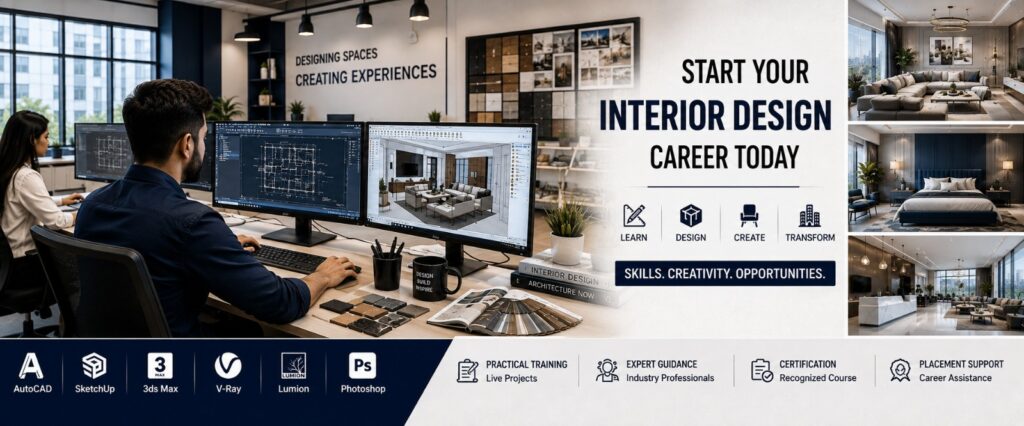
Interior design students learning AutoCAD and SketchUp while creating modern residential and commercial interior designs.

How to Start an Interior Design Career | Beginner Guide

If you’re asking yourself, “How I start my career in interior designing from scratch?”, you’re not alone. Thousands of students, fresh graduates, and career changers have the same question. In this guide, you’ll learn everything from the basics of interior design to the skills, software, career opportunities, and how to choose the Best Interior Design Institute in Indore to begin your journey. What is Interior Design? Simple Definition Interior Design is the art and science of planning, designing, and improving indoor spaces to make them functional, comfortable, safe, and visually appealing. An interior designer doesn’t just choose colors or furniture. They carefully plan layouts, lighting, materials, furniture placement, and décor to create spaces that meet the client’s needs. Why Choose Interior Designing as a Career? Interior design is one of the fastest-growing creative professions. As cities expand and people invest more in homes and commercial spaces, the demand for skilled interior designers continues to increase. Here are some reasons why students choose this career: Creative and rewarding work Growing demand in residential and commercial projects Opportunities to work with architects and builders Freelancing and business opportunities Competitive earning potential Chance to create spaces that improve people’s lives If you enjoy creativity, problem-solving, and working with people, interior designing can be a fulfilling career. How I Start My Career in Interior Designing from Scratch Starting from zero may seem challenging, but it becomes manageable when you follow a clear roadmap. Step 1: Understand What Interior Designers Do Before enrolling in a course, learn about the profession. Interior designers work on: Space planning Furniture layouts Lighting design Color selection Material selection False ceiling design Modular kitchen planning Wardrobe design 3D visualization Client presentations Understanding these responsibilities will help you decide if this career matches your interests. Step 2: Learn the Fundamentals of Interior Design Every successful designer starts with the basics. You’ll learn: Design principles Color theory Space planning Texture and materials Furniture design Building measurements Design concepts Client requirements These fundamentals form the foundation of every project. Step 3: Learn Industry-Standard Software Modern interior designers use professional software to create accurate drawings and realistic 3D designs. A quality Best Interior Design Training Institute should teach: AutoCAD SketchUp 3ds Max V-Ray Lumion Revit (optional) Photoshop (for presentations) Software skills make your ideas easier to communicate with clients and contractors. Step 4: Practice with Real Projects The best way to improve is by working on practical assignments. Start designing: Bedroom layouts Living rooms Modular kitchens Office interiors Café concepts Retail stores Small apartments Each project helps you build confidence and develop your design style. Step 5: Build a Strong Portfolio Your portfolio is one of the most important tools for getting hired. Include: 2D floor plans 3D renders Mood boards Furniture layouts Lighting plans Material boards Before-and-after concepts Residential and commercial projects A well-organized portfolio showcases your creativity and technical skills. Step 6: Complete an Interior Design Course Choose an institute that focuses on practical learning rather than theory alone. Look for: Live projects Experienced faculty Updated software training Portfolio development Industry exposure Certification Placement assistance Step 7: Apply for Internships Internships allow you to work on real client projects and understand how the industry operates. You’ll learn: Client communication Site visits Material selection Vendor coordination Budget planning Project execution This experience can make your transition into a full-time role much smoother. Step 8: Start Your Professional Career Once you’ve completed your training and built your portfolio, you can apply for roles such as: Interior Designer Junior Interior Designer 3D Visualizer CAD Designer Space Planner Furniture Designer Design Consultant Some professionals also choose to freelance or start their own design studio after gaining experience. Essential Skills Every Interior Designer Needs To succeed in this field, you should develop both creative and technical skills. Creative Skills Space planning Color coordination Design visualization Creativity Attention to detail Technical Skills AutoCAD drafting 3D modeling Rendering Material knowledge Measurement accuracy Furniture planning Soft Skills Communication Time management Client handling Problem-solving Teamwork Presentation skills Career Opportunities in Interior Design After completing an Interior Design Course, you can apply for various roles based on your interests and expertise. Interior Designer Plans and designs residential, commercial, and hospitality spaces while coordinating with clients and contractors. Residential Interior Designer Specializes in homes, apartments, villas, modular kitchens, bedrooms, and living spaces. Commercial Interior Designer Designs offices, coworking spaces, shopping malls, retail outlets, and corporate environments. 3D Visualizer Creates realistic 3D models and renders to help clients visualize the final design before construction begins. Furniture Designer Designs custom furniture that combines aesthetics, comfort, and functionality. Space Planner Optimizes layouts to improve movement, functionality, and space utilization. Interior Design Consultant Provides expert advice on materials, lighting, furniture, and design concepts for clients and businesses. Common Mistakes Beginners Make Starting an Interior Design Career is exciting, but many beginners make avoidable mistakes. Ignoring Design Fundamentals  Learning Only One Software  Not Building a Portfolio  Overlooking Practical Experience  Following Trends Without Understanding Client Needs    Why Choose TECH CLUSTER? If you’re looking for the Best Interior Design Institute in Indore, TECH CLUSTER focuses on practical learning and industry-ready skills. Highlights Practical, project-based training Experienced industry trainers Modern computer labs Training on AutoCAD, SketchUp, 3ds Max, V-Ray, and other industry software Portfolio development Live project exposure Interview preparation Resume-building sessions Industry-recognized certification Placement assistance Conclusion Starting an Interior Design Career may seem challenging at first, but every successful designer begins with the same first step—learning the right skills and gaining practical experience. Tech Cluster offers practical Interior Design training designed to help students develop industry-ready skills through hands-on learning, portfolio development, certification, and placement assistance. If you’re looking to build a successful career in interior design, exploring their program can be a valuable first step.   1. How do I start an Interior Design career with no experience? Start by learning the fundamentals of interior design, enroll in a professional course, master industry-standard software, build a portfolio, and gain practical experience through internships or live projects. 2. Who

How to Start an Interior Design Career | Beginner Guide Read More »

A professional banner of how to become an an interior designer working on floor plans with the title "How to Become an Interior Designer" in a modern dark blue design.

How To Become an Interior Designer

 How To Become an Interior Designer: A Step-by-Step Guide Ever walked into a beautifully designed space and wondered who created it? That’s an interior designer at work. But it’s not just about picking furniture or paint colors. Interior design is about solving problems and making spaces more functional, improving how people live and work. Imagine a small apartment feeling bigger or a dull office becoming more productive – that’s the power of good design. If you’re creative, like planning, and enjoy bringing ideas to life, this career might be for you. Let’s look at how you can become an interior designer.  How To Become an Interior Designer: What Does an Interior Designer Actually Do? Many people think interior designers just decorate. That’s not quite right. Professional interior designers combine creativity with technical skills. They plan layouts, make the most of space, choose materials, create lighting plans, prepare 2D and 3D designs, work with contractors, and make sure everything fits together. Essentially, they design spaces that look good and work well, whether it’s a home, store, hotel, or office. Every successful project starts with careful planning.  Become an Interior Designer: Roles and Responsibilities Explained Cities are growing, homes are getting smarter, and businesses want attractive workplaces. Restaurants focus on atmosphere, and hotels invest in guest experience. All this means more demand for skilled interior designers. The interior design market is growing because of more urbanization, real estate development, and renovations. People are also seeking professional help for their spaces more often. Good design is no longer a luxury; it’s becoming an expectation. Step 1: Develop Your Design Sense Every good designer starts by observing. Notice how different spaces make you feel. Why does one café feel cozy while another feels cramped? Why does a living room look bigger with less furniture? Ask yourself questions. Study layouts, furniture arrangement, colors, textures, lighting, and proportions. Design inspiration is everywhere – in shopping malls, hotels, airports, homes, even your own room. Step 2: Learn Interior Design Professionally Talent is a good start, but professional training builds a career. A structured interior design course will teach you the technical knowledge employers look for, such as space planning, color psychology, furniture design, material selection, lighting design, residential and commercial interiors, building codes, client communication, and project management. You’ll also get hands-on experience with industry-standard software. Step 3: Master Interior Design Software Today’s designers don’t just sketch. They create detailed digital designs. Common software includes AutoCAD, SketchUp, 3ds Max, Revit, Photoshop, V-Ray, and Lumion. These tools help create floor plans, realistic 3D views, furniture layouts, and client presentations. The better your software skills, the more job opportunities you’ll have. Step 4: Build a Strong Portfolio Your portfolio is your first impression. Employers and clients want to see your creativity. Include residential designs, bedroom concepts, living room layouts, kitchen plans, office interiors, café designs, mood boards, material samples, and 3D renderings. Don’t wait for paid projects. Create concept designs, redesign your own room, or plan a dream workspace. Every project adds value. Step 5: Gain Practical Experience Classroom learning is important, but working on real projects is a game-changer. Internships will expose you to client meetings, construction sites, budgeting, working with vendors, and project execution. This practical experience builds confidence and teaches you how real projects actually work, something no textbook can cover. Step 6: Improve Communication Skills Interior designers don’t just design; they present ideas, explain concepts, manage client expectations, handle revisions, and collaborate with architects, engineers, electricians, contractors, and clients. Strong communication often determines a project’s success, not just creativity. Step 7: Stay Updated with Design Trends Interior design is always changing. Trends like minimalism, biophilic design, smart homes, sustainable materials, and multi-functional furniture constantly influence interiors. The best designers keep learning by attending workshops, following industry experts, studying international projects, and updating their skills. Growth never stops, and neither should your learning. Career Opportunities After Becoming an Interior Designer Qualified interior designers can work in many industries. Popular options include residential design, commercial design, office space design, retail design, hospitality design, exhibition design, furniture design, set design, kitchen and modular design, and freelance work. Some professionals even start their own design studios after gaining enough experience. Skills Every Interior Designer Should Have Technical skills are important, but so is creative thinking. Successful interior designers usually have creativity, problem-solving ability, space planning skills, attention to detail, color coordination, visualization skills, drawing ability, CAD software knowledge, time management, and communication skills. Together, these abilities help turn ideas into functional spaces. Is Interior Design the Right Career for You? Ask yourself: Do you enjoy redesigning rooms? Do you notice furniture arrangements everywhere you go? Can you imagine better layouts for everyday spaces? Do colors, lighting, and decor naturally catch your eye? If you answered yes to most of these, interior design could be a rewarding career. Your creativity becomes your job, which is exciting. Conclusion Interior design is much more than just decoration. It’s a mix of creativity, technical knowledge, planning, and problem-solving. The journey takes time.  Start your journey with Tech Cluster Designwala today where you’ll learn software, build projects, make mistakes, and get better. Gradually, you’ll gain the confidence to design spaces people love. Every successful interior designer started where you are now – with curiosity and a desire to learn. Frequently Asked Questions (FAQs) 1. How long does it take to become an interior designer? Most professional courses take from 6 months to 3 years, depending on the program. 2. Which software should an interior designer learn? Key software includes AutoCAD, SketchUp, 3ds Max, Revit, Photoshop, Lumion, and V-Ray. 3. Can I become an interior designer after 12th grade? Yes, students from any stream can usually enroll in an interior design course after 12th grade, depending on the school’s requirements. 4. Is interior design a good career? Yes. With growing demand in homes, businesses, hospitality, and retail, interior design offers diverse opportunities and good growth potential. 5. Do interior designers need drawing skills? Basic

How To Become an Interior Designer Read More »

Interior Design Institute in Indore | Tech Cluster Designwala

Interior Design Institute in Indore: Build Your Creative Career with Tech Cluster Designwala Are you looking for the best Interior Design Institute in Indore? If yes, choosing the right training institute is the first step toward a successful career in interior design. Interior design is a fast-growing field that combines creativity with functionality. From modern homes to commercial spaces, skilled designers are in high demand. A professional Interior Design Course in Indore can help you develop practical skills, learn industry-standard software, and build a strong portfolio. What is Interior Design? Interior design is the process of creating functional, attractive, and comfortable indoor spaces. It involves space planning, color selection, furniture arrangement, lighting design, and material selection to enhance the look and usability of a space. Interior designers work on residential, commercial, retail, hospitality, and office projects. Why Choose Interior Design as a Career? High Demand The growth of real estate and construction industries has increased the demand for skilled interior designers. Creative Career Interior design allows you to turn ideas into beautiful and functional spaces while expressing your creativity. Multiple Career Opportunities After completing an interior design course, you can work with: Interior design firms Architectural companies Real estate developers Furniture brands Construction companies Freelance projects Attractive Income Potential Experienced designers can earn competitive salaries and additional income through freelance work and consulting. Essential Skills for Interior Designers To succeed in this field, students should develop: Creativity and visualization skills Space planning abilities Communication skills Problem-solving skills Knowledge of colors and materials Design software expertise Therefore, professional training plays an important role in building these skills. Why Professional Training Matters While online resources provide basic knowledge, structured training offers practical exposure and industry experience. Benefits include: Live project experience Portfolio development Software training Industry exposure Internship opportunities Placement assistance As a result, students become job-ready and confident. Why Choose Tech Cluster Designwala? Tech Cluster Designwala is recognized as a leading Interior Design Institute in Indore because of its practical learning approach and industry-focused curriculum. Key Benefits Practical training with live projects Experienced industry mentors Portfolio development support Job-oriented curriculum Internship opportunities Placement assistance Modern learning environment Industry-standard software training Moreover, the institute focuses on real-world learning rather than only theoretical concepts. What Will You Learn? Design Fundamentals Learn the principles and elements of interior design. Space Planning Understand how to create functional and visually appealing layouts. Furniture & Lighting Design Explore how furniture and lighting impact interior spaces. Color Theory & Materials Learn to select suitable colors, textures, and materials. Software Training Gain practical knowledge of: AutoCAD SketchUp 3ds Max Project-Based Learning Work on residential and commercial projects to gain hands-on experience. Career Opportunities After Course Completion Students trained at a reputed Interior Design Institute in Indore can pursue roles such as: Interior Designer Space Planner 3D Visualizer Furniture Designer Design Consultant Residential Interior Designer Commercial Interior Designer Freelance Interior Designer Importance of a Portfolio A strong portfolio helps showcase your creativity and technical skills. Your portfolio should include: Design concepts Floor plans 2D drawings 3D visualizations Residential projects Commercial projects Consequently, a professional portfolio increases your chances of securing jobs and freelance projects. Future Scope of Interior Design The future of interior design is highly promising. Growing urbanization, smart homes, sustainable architecture, and modern commercial spaces are creating new opportunities for skilled professionals. Additionally, trends such as eco-friendly interiors and smart living solutions are increasing the demand for trained interior designers. Conclusion Interior design is an exciting career that combines creativity, innovation, and functionality. If you are searching for the best Interior Design Institute in Indore, Tech Cluster Designwala offers practical training, software expertise, portfolio development, and placement support to help you succeed. Start your journey today and turn your creativity into a rewarding profession with Tech Cluster Designwala. Frequently Asked Questions Related To Interior Design Course In Indore Who Can Join an Interior Design Course? An Interior Design Course is suitable for students, graduates, working professionals, and anyone interested in design and space planning. Whether you are starting your career or looking to enhance your creative skills, interior design training can help you build industry-relevant knowledge. Do I Need AutoCAD Knowledge for Interior Design? Basic AutoCAD knowledge is beneficial for Interior Design as it helps create accurate floor plans, layouts, and technical drawings. However, beginners can start learning Interior Design without prior AutoCAD experience, as many training programs cover essential design software as part of the curriculum. What Career Opportunities Are Available After an Interior Design Course? After completing an Interior Design Course, learners can explore roles such as Interior Designer, Space Planner, Design Consultant, Furniture Designer, Visualizer, and CAD Designer. Opportunities are available in architecture firms, interior design companies, real estate businesses, and freelance projects. What Is the Future Scope of Interior Design? The future of Interior Design is promising due to increasing demand for functional and aesthetically appealing residential, commercial, and corporate spaces. As modern construction and renovation projects continue to grow, skilled interior designers are expected to remain in high demand.  Which Is the Best Interior Design Course in Indore? The best Interior Design Course in Indore is one that offers practical training, industry-relevant software skills, live projects, and career support. Tech Cluster provides hands-on Interior Design training that helps students develop technical and creative skills required for professional growth in the design industry.    

Interior Design Institute in Indore | Tech Cluster Designwala Read More »

Graphic desgining training center indore India