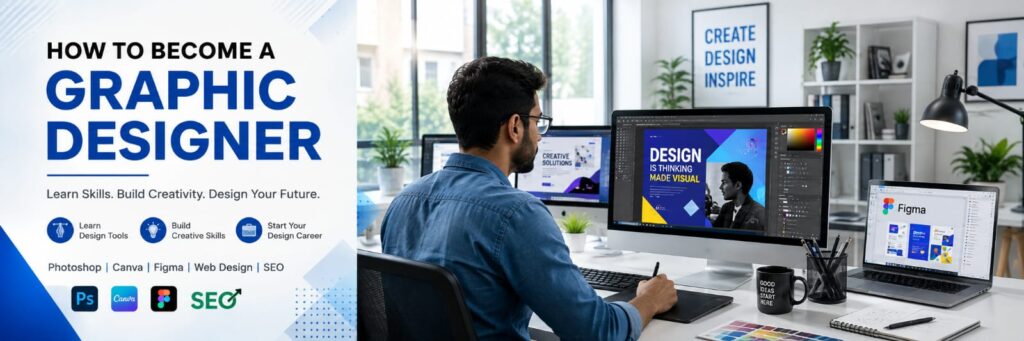
Become a Graphic Designer Complete Beginner’s Guide
Have you ever seen an Instagram post and thought, “How did they make this look so good?” The colours feel right. The fonts look clean. Nothing feels crowded. And somehow, you understand the message within seconds. That is the power of good graphic design. What Does a Graphic Designer Do? A graphic designer uses visual elements to communicate a message. That could mean promoting a product, building a brand identity, explaining information, or simply helping a business communicate more effectively. A graphic designer may create: Social media posts Logos Brand identities Posters Brochures Advertisements Packaging Website graphics YouTube thumbnails Presentations Infographics Marketing creatives But graphic design isn’t simply about making something “look attractive.” There is a problem behind almost every design. For example, imagine a restaurant launching a new food offer. The designer has to decide: What should people notice first? Which information is most important? What colours match the brand? Which font is easy to read? Where should the offer appear? What action should the customer take? That’s where design thinking comes in. Graphic design combines creativity with communication and problem-solving. How to Become a Graphic Designer? Step 1: Learn the Fundamentals of Graphic Design Before opening Photoshop or Illustrator, understand what makes a design work. Colour Theory Colour isn’t just decoration. It affects how a design feels and how information is understood. Start with: Primary and secondary colours Complementary colours Colour harmony Contrast Brand colours Basic colour psychology You don’t need to memorise every colour rule. You need to understand why a particular colour combination works for a particular audience and purpose. Typography A font can completely change the personality of a design. But choosing fonts isn’t enough. Learn about: Font families Font pairing Font size Line height Letter spacing Hierarchy Readability A stylish font that nobody can read isn’t a good design. Simple. Layout and Composition Now think about arrangement. Where should the headline go? How much space should exist between elements? What should align with what? Important concepts include: Alignment Balance Spacing Grids Proportion White space Contrast Visual hierarchy Visual Hierarchy Here’s a useful question: What should the viewer see first, second, and third? If everything is equally large, bold, and colourful, nothing has priority. Good design guides attention. Step 2: Learn Graphic Design Software Once your fundamentals are clear, start learning design software. Some commonly used tools include: Software Common Uses Adobe Photoshop Photo editing, advertisements, social media creatives Adobe Illustrator Logos, icons, vector graphics Adobe InDesign Brochures, magazines and print layouts CorelDRAW Print and vector design Figma UI design and digital interfaces Canva Quick social media and marketing designs Step 3: Practise by Creating Real Projects This is where many beginners get stuck. They watch tutorial after tutorial. They understand the process while watching. Then they open Photoshop alone and think: “What should I design now?” That’s the problem. Watching tutorials is not the same as designing. Start creating projects yourself. Try: Restaurant social media campaigns Clothing brand logos Product advertisements Event posters YouTube thumbnails Instagram carousels Brand identity projects Packaging designs Promotional banners You don’t need a real client. Create fictional brands. Step 4: Learn to Think Like a Designer Here’s a common beginner mistake: Opening Photoshop before deciding what the design needs to communicate. Reverse that process. Before designing, ask: Who is the audience? What is the purpose? What message should people remember? What action should they take? Where will the design be used? What personality should the brand communicate? Think first. Design second. A professional designer isn’t simply someone who knows software. A professional designer knows how to solve a visual communication problem. Step 5: Build a Professional Graphic Design Portfolio Your portfolio is one of the most important things you can build. A certificate shows that you completed training. A portfolio shows what you can actually do. That’s a major difference. Instead of uploading every design you’ve ever created, select your strongest work. A beginner portfolio could include: 2–3 branding projects 3–5 social media designs 2 advertising projects 1 packaging project 1 poster campaign 1 typography project 1 personal creative project Don’t just show the final image. For your strongest projects, explain: Problem → Idea → Design Process → Final Design This gives employers an understanding of how you think. What Skills Do You Need to Become a Graphic Designer? A job-ready graphic designer needs more than creativity. Creative Skills Visual thinking Creativity Colour sense Typography Composition Concept development Attention to detail Visual storytelling Technical Skills Photoshop Illustrator Vector design Image editing Digital design Print design Basic branding File preparation Professional Skills Communication Time management Understanding briefs Problem-solving Handling feedback Meeting deadlines Presenting ideas Do You Need a Degree to Become a Graphic Designer? Not necessarily. A degree in design, fine arts, or a related field can provide structured education. But it isn’t the only route into graphic design. People also enter the field through: Professional courses Certifications Self-learning Internships Freelancing Practical projects Portfolio development Career Options After Learning Graphic Design Graphic design can lead to different career paths. Graphic Designer Creates visual communication for brands, businesses, agencies, and organisations. Brand Identity Designer Works on: Logos Colour systems Typography Brand guidelines Visual identity Social Media Designer Creates visual content for platforms such as Instagram, Facebook, LinkedIn, and YouTube. Advertising Designer Creates graphics for marketing campaigns and advertisements. Packaging Designer Works on product packaging, labels, boxes, and related visual communication. Motion Graphics Designer Combines graphic design with animation and movement. Freelance Graphic Designer Works directly with clients and manages projects independently. You don’t have to choose your specialisation immediately. Start with the fundamentals. Then see what type of work you enjoy most. can also complement careers in digital marketing, branding, social media marketing, content creation, UI/UX, and video production. l observation. Conclusion If you’re considering professional training, For learners in Indore, Tech Cluster can be considered as one option for structured graphic design training, especially if you’re looking for practical learning and career-oriented guidance. FAQs 1. How can
Become a Graphic Designer Complete Beginner’s Guide Read More »